

Fungicide Drone Spraying Services
Protect crops from fungal diseases with fast, accurate and uniform fungicide application using advanced agricultural drone technology.
ABOUT FUNGICIDE SPRAYING
Professional Crop Disease Protection
Fungicide drone spraying is the aerial application of approved fungicides using agricultural drones to protect crops from fungal disease pressure. Instead of relying only on manual spraying across large acreage, the drone follows a planned route and applies fungicide in a measured, professional and field-efficient way over the canopy.
Fungal diseases can spread rapidly when crop conditions, humidity, leaf wetness and weather favor infection. That is why preventive or early-stage application matters. If the crop is treated at the right time, disease pressure can often be managed more effectively than waiting for visible spread across larger portions of the field.
Droid Krishi uses agricultural drones for organised fungicide application with calibrated spray systems and planned aerial passes. This helps support more uniform coverage across the crop canopy while reducing repeated walking or machine movement through standing crops. The result is a cleaner application workflow with reduced crop disturbance and better operational precision. Every spray plan should follow product label guidance, crop stage and suitable weather conditions for safe and responsible field treatment.

Common Fungal Diseases
Typical crop disease pressure where timely fungicide drone spraying can support protection planning.
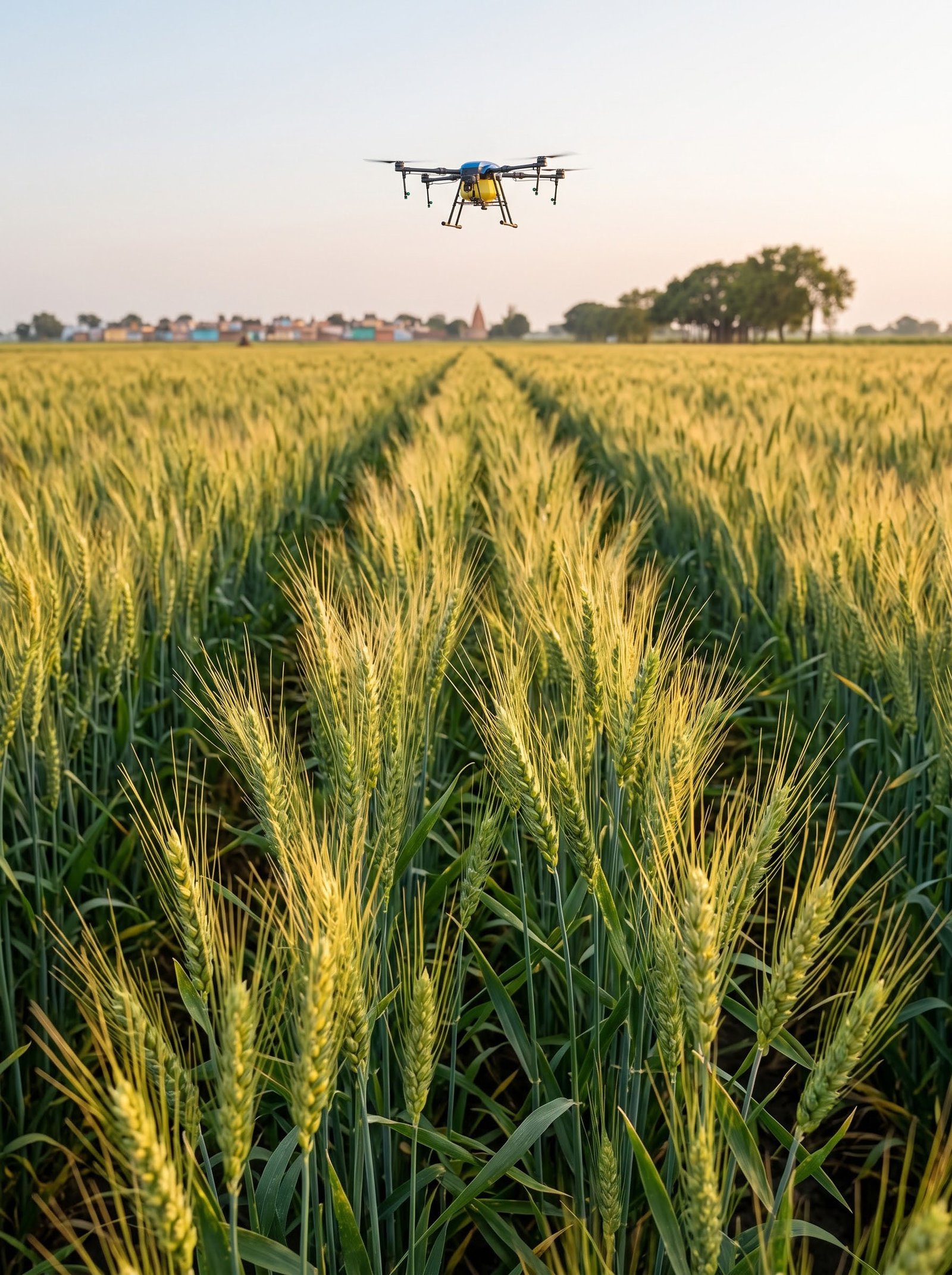
Rice – Blast Disease
Leaf and neck blast can spread quickly in favorable humidity and needs timely protection planning.
Wheat – Rust
Rust infection can progress across foliage fast when crop and weather conditions support spread.
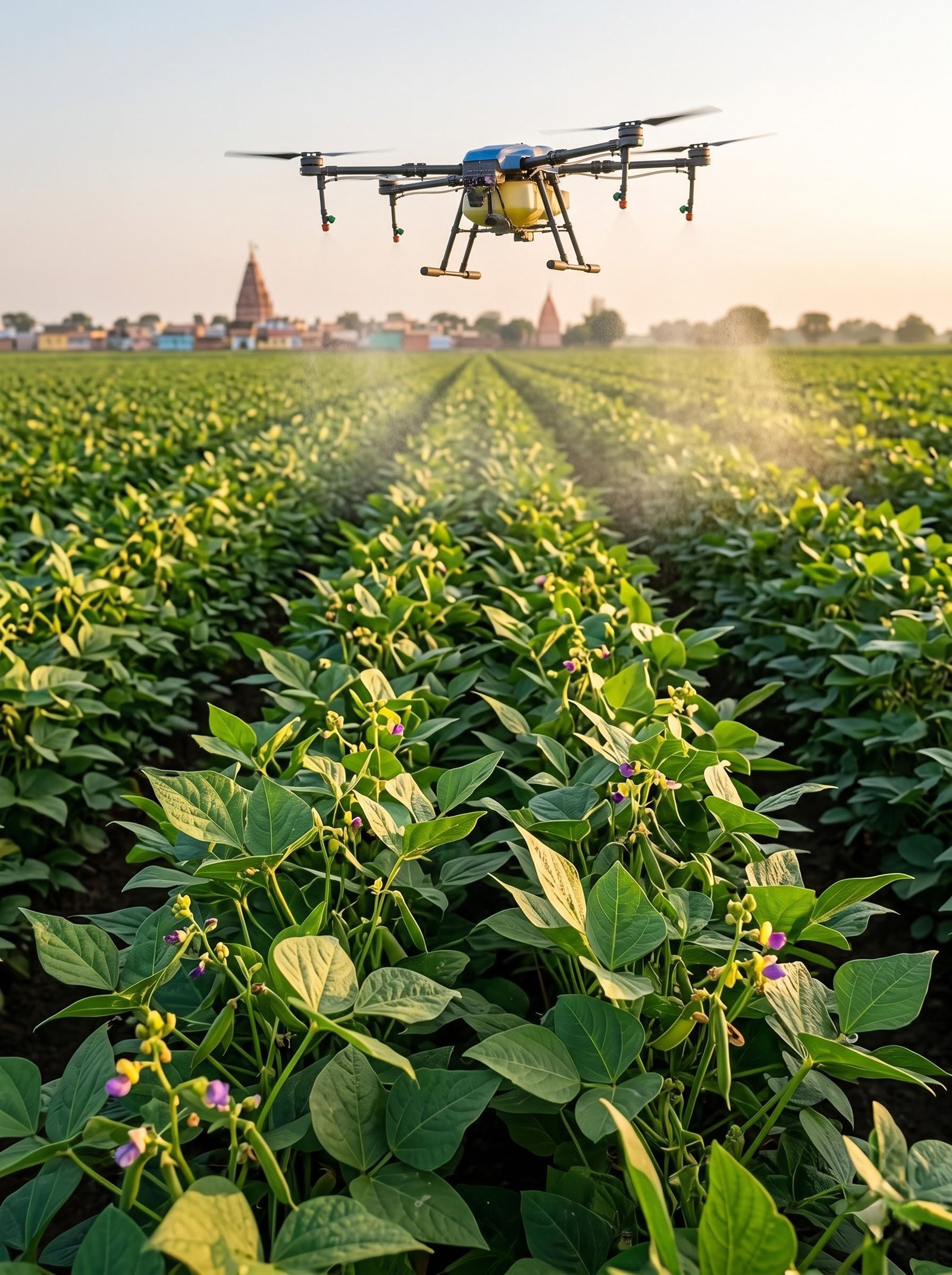
Soybean – Leaf Spot
Leaf spot disease can affect plant vigor and calls for careful canopy-level fungicide coverage.
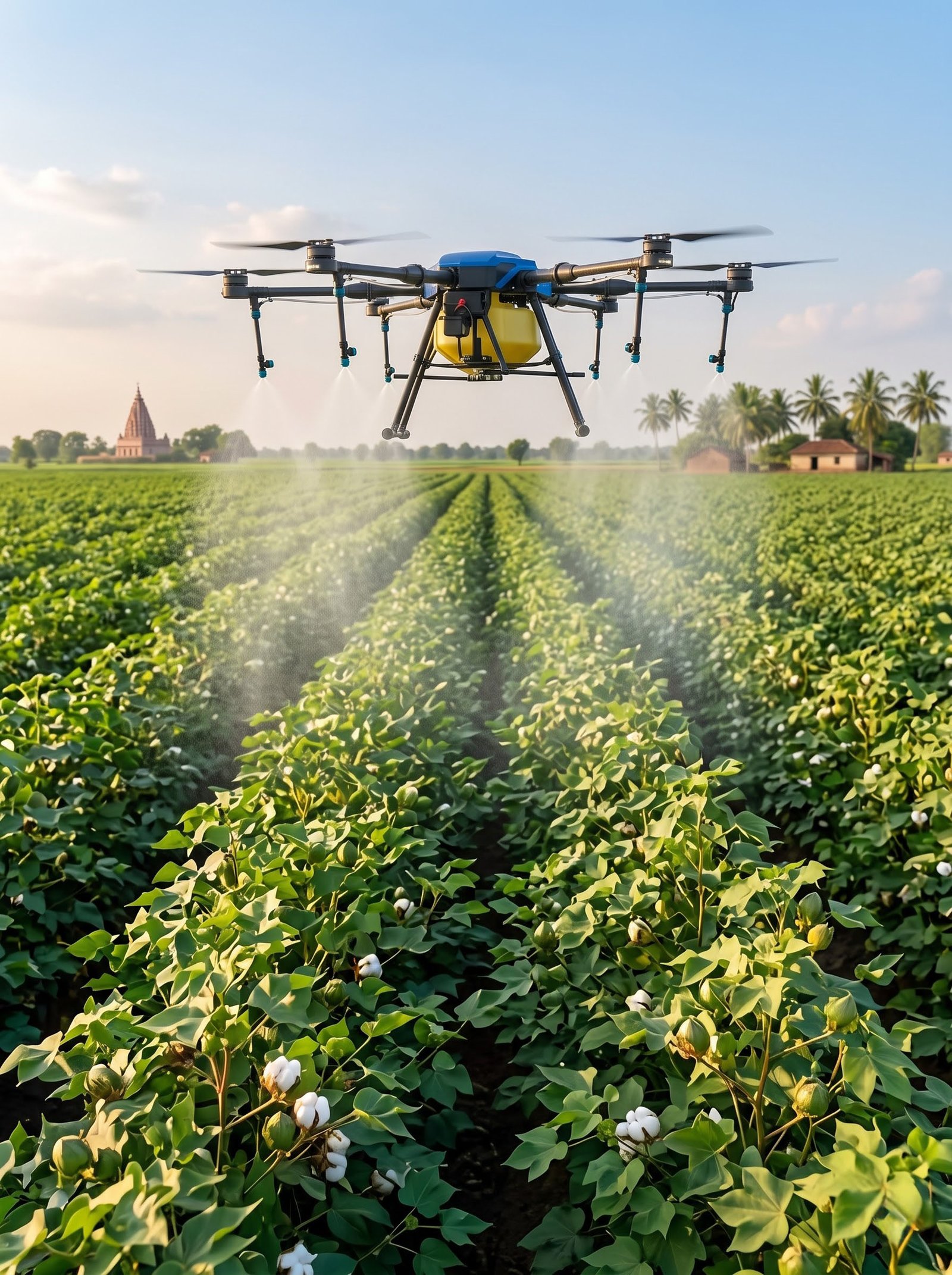
Cotton – Alternaria
Alternaria leaf blight pressure can build in cotton during conducive weather and crop stages.
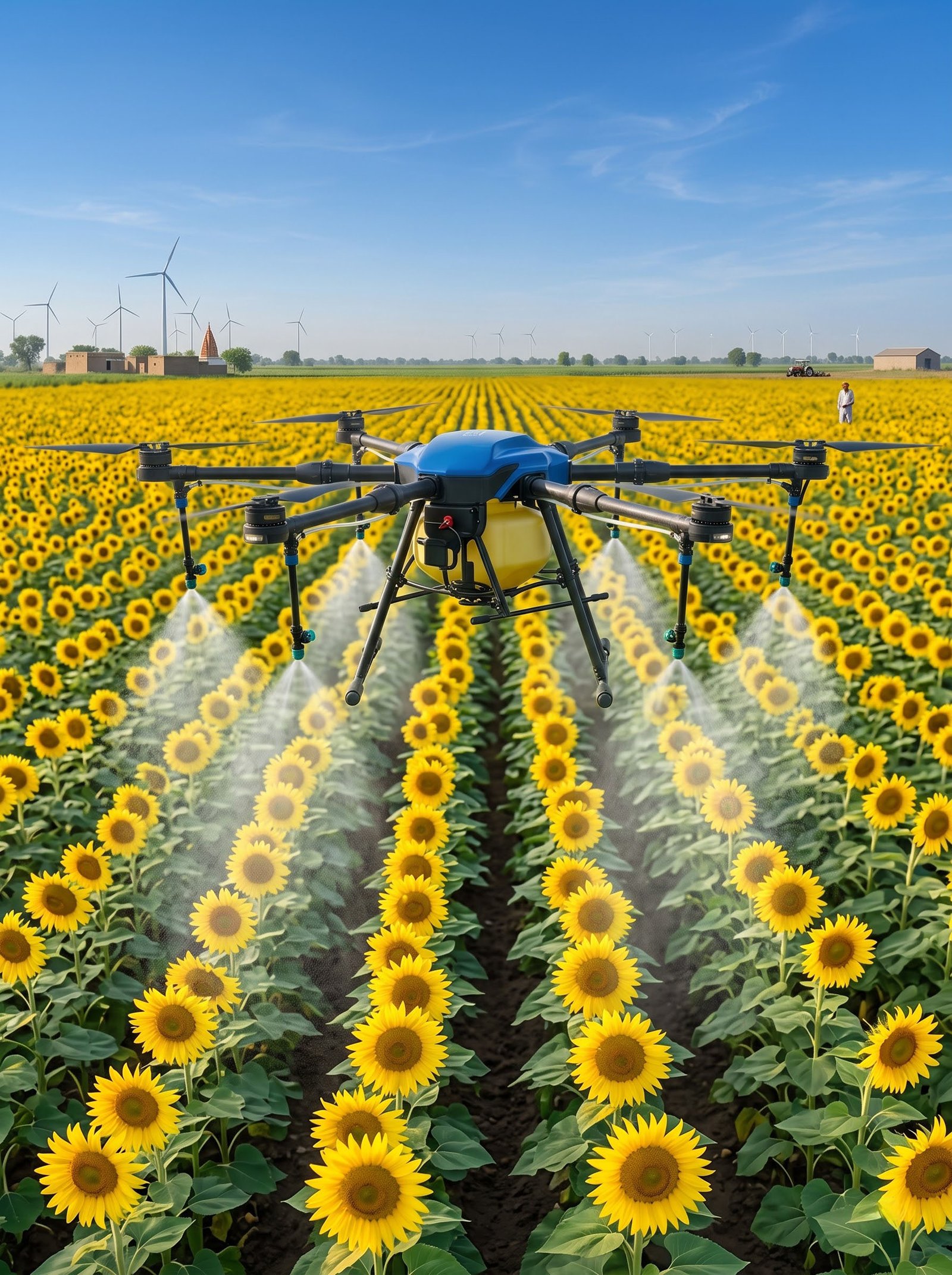
Groundnut – Tikka Disease
Tikka disease can affect foliage quality, making early and even fungicide application important.
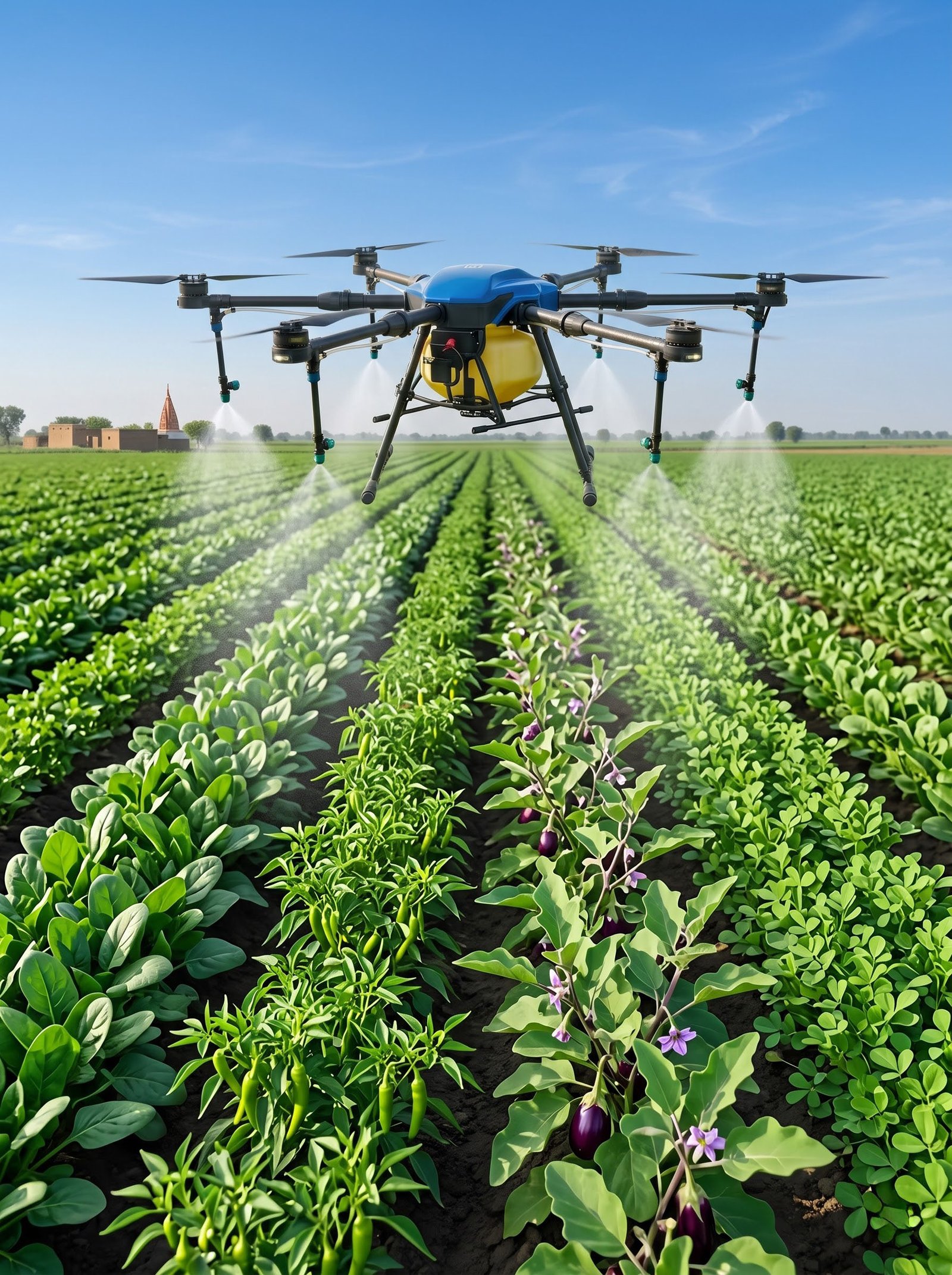
Vegetables – Powdery Mildew
Powdery mildew can spread across leaves and needs organised foliage coverage for better control support.
Why Drone Fungicide Spraying?
Precision disease management support for standing crops and large fields.
Uniform Canopy Penetration
Planned passes help support more even fungicide spread across crop foliage.
Faster Disease Response
Useful when disease pressure is developing and quick treatment is important.
Reduced Crop Damage
Aerial application reduces repeated walking or machine disturbance in standing crops.
Precision Flight Planning
GPS-guided routes help keep spray operations organised and repeatable.
Optimized Spray Application
Calibrated output supports controlled fungicide application based on field need.
Better Coverage in Standing Crops
Drone access is practical where dense canopy or field conditions limit conventional entry.
Suitable Crops
Fungicide application planning for major field and horticulture crops.
Rice
Suitable for Fungicide Application
Wheat
Suitable for Fungicide Application
Soybean
Suitable for Fungicide Application
Cotton
Suitable for Fungicide Application
Groundnut
Suitable for Fungicide Application

Grapes
Suitable for Fungicide Application
Tomato
Suitable for Fungicide Application
Chilli
Suitable for Fungicide Application
Best Time for Fungicide Spraying
A clear disease-management flow from observation to crop health protection.
Disease Monitoring
Field scouting and disease-risk observation help identify the right response window.
Early Infection Detection
Visible early symptoms and field assessment support timely fungicide planning.
Drone Fungicide Application
The drone applies fungicide through planned aerial passes with calibrated output.
Crop Health Protection
Post-treatment monitoring supports continued disease management decisions.
Drone vs Conventional Fungicide Spraying
A practical comparison of disease-treatment workflow in field conditions.
| Factor | Conventional Spraying | Drone Spraying |
|---|---|---|
| Treatment Speed | Slower on larger areas | Faster planned treatment coverage |
| Standing Crop Access | Can be difficult in wet or dense fields | Better access above standing crop canopy |
| Uniform Coverage | More dependent on ground movement and operator consistency | Planned passes support balanced canopy coverage |
| Crop Disturbance | Repeated entry may disturb crop rows | Reduced physical disturbance during application |
| Labor Requirement | Higher manpower dependency | Lower field labor dependency during spraying |
| Field Efficiency | Efficiency can drop in uneven or hard-access fields | Strong operational efficiency across planned fields |
Applications should follow recommended fungicide labels, crop stage and suitable weather conditions.
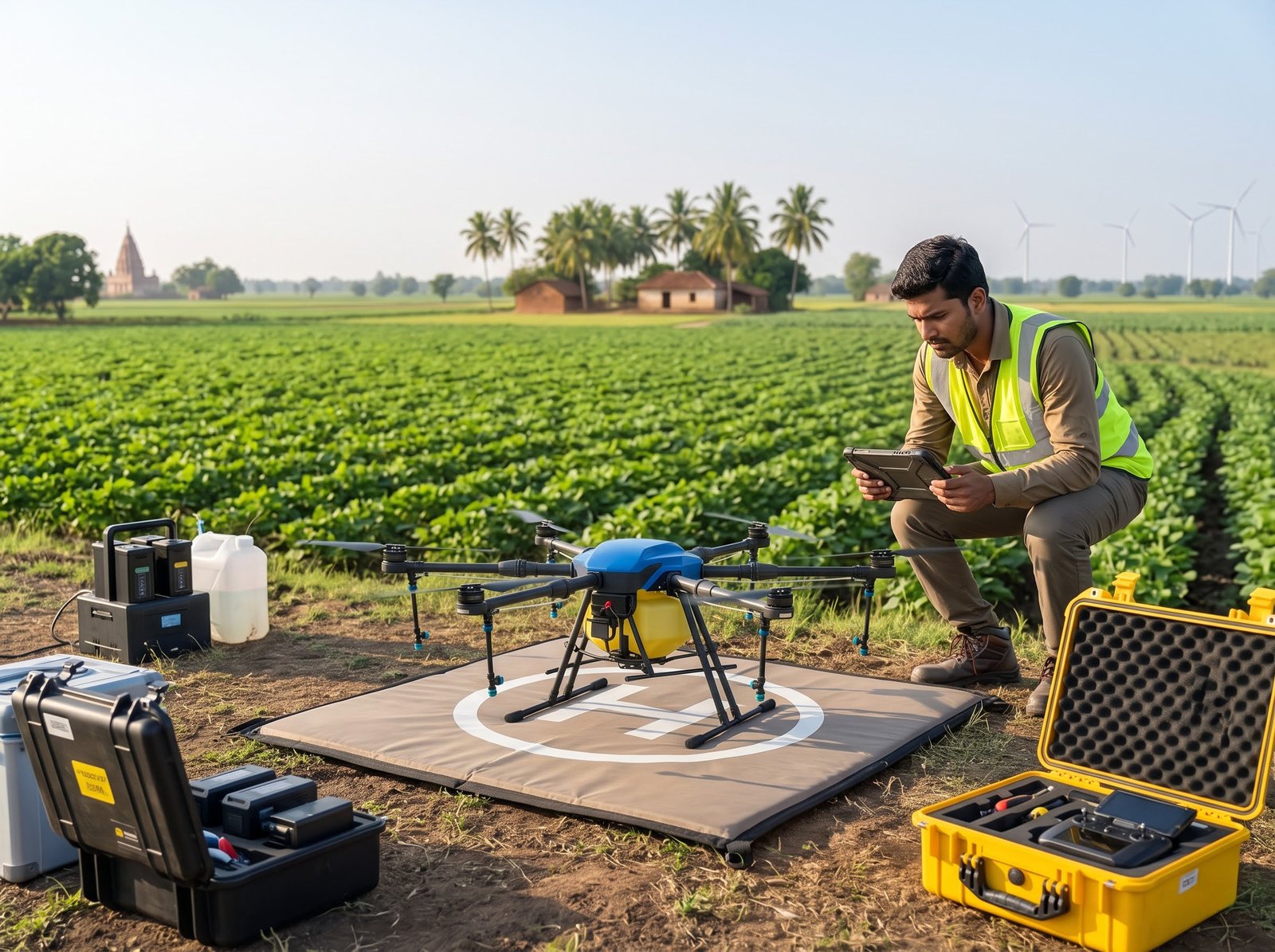
Professional Operations with Safety First
- Trained Operators
- Calibrated Spray System
- Weather Assessment
- Proper Flight Planning
- Safe Chemical Handling
- Uniform Application Standards
Frequently Asked Questions
Clear answers about fungicide drone spraying services from Droid Krishi.
Protect Your Fields Before Disease Spreads
Book professional fungicide drone spraying services with Droid Krishi for precise, reliable and efficient crop disease protection.