

Insecticide Drone Spraying Services
Control harmful insects quickly with precision aerial insecticide application. Droid Krishi delivers fast, uniform and professional drone spraying for healthier crops and better field protection.
Managed Insect Pressure
Professional insecticide application aligned with crop stage, field condition and label guidance.
Field-Ready Access
Useful for dense, tall or wet fields where manual entry is slow, difficult or disruptive.

ABOUT THE SERVICE
Professional Insect Control Through Drone Technology
Insecticide drone spraying is the aerial application of approved insect-control products using agricultural drones. Instead of relying only on backpack spraying across large acreage, a planned drone route applies insecticide in a measured and professional way over the crop canopy. This makes insecticide drone spraying especially practical where pest pressure is spreading quickly and timely response matters.
Early insect management is important because sucking pests, borers, caterpillars and hoppers can reduce plant vigor, damage leaves, affect boll and grain formation, and increase crop stress if they are not addressed at the right time. Droid Krishi supports insecticide drone spraying with calibrated systems, organised flight planning and consistent aerial passes designed for real farm conditions.
Aerial application also reduces the need for workers to walk through standing crops with heavy manual equipment. That means less crop disturbance, more even droplet distribution across the canopy and reduced operator exposure during spraying. When planned according to crop stage, label recommendation and suitable weather, drone insecticide application offers a fast, uniform and modern approach to insect control.
COMMON FIELD PROBLEMS
Common Crop Insect Problems
Typical insect pressure seen across major crops where timely drone insecticide application can support better protection.
Cotton
Bollworm and whitefly pressure can spread fast in standing cotton and needs timely canopy coverage.
Soybean
Stem fly and leaf caterpillar attacks can affect crop health if not addressed at the right stage.
Rice
Brown planthopper and leaf folder require quick response across wet and difficult-to-enter fields.
Sugarcane
Early shoot borer and pyrilla management benefits from access over tall, dense crop stands.
Maize
Fall armyworm can spread aggressively, making rapid insecticide application important in affected plots.
Vegetables
Aphids and thrips often need careful, even application over foliage for effective pest suppression.
WHY DRONE APPLICATION
Why Choose Drone Insecticide Spraying?
Modern aerial insect control designed for speed, crop safety and consistent field coverage.
Rapid Response
Useful when insect pressure is rising and fields need quick, organised spraying support.
Precision Application
Calibrated aerial delivery helps keep passes consistent across the planned spray area.
Better Canopy Reach
Designed to support insecticide droplet spread across foliage where pest activity is concentrated.
Reduced Water Requirement
Drone operations typically use controlled spray volumes as per product and nozzle guidance.
Standing Crop Friendly
Aerial spraying helps avoid trampling and movement damage caused by repeated field entry.
Uniform Field Coverage
Planned routes and steady passes support balanced coverage across the working area.
Suitable Crops
Drone insecticide spraying planned for major field and horticulture crops based on crop stage and need.
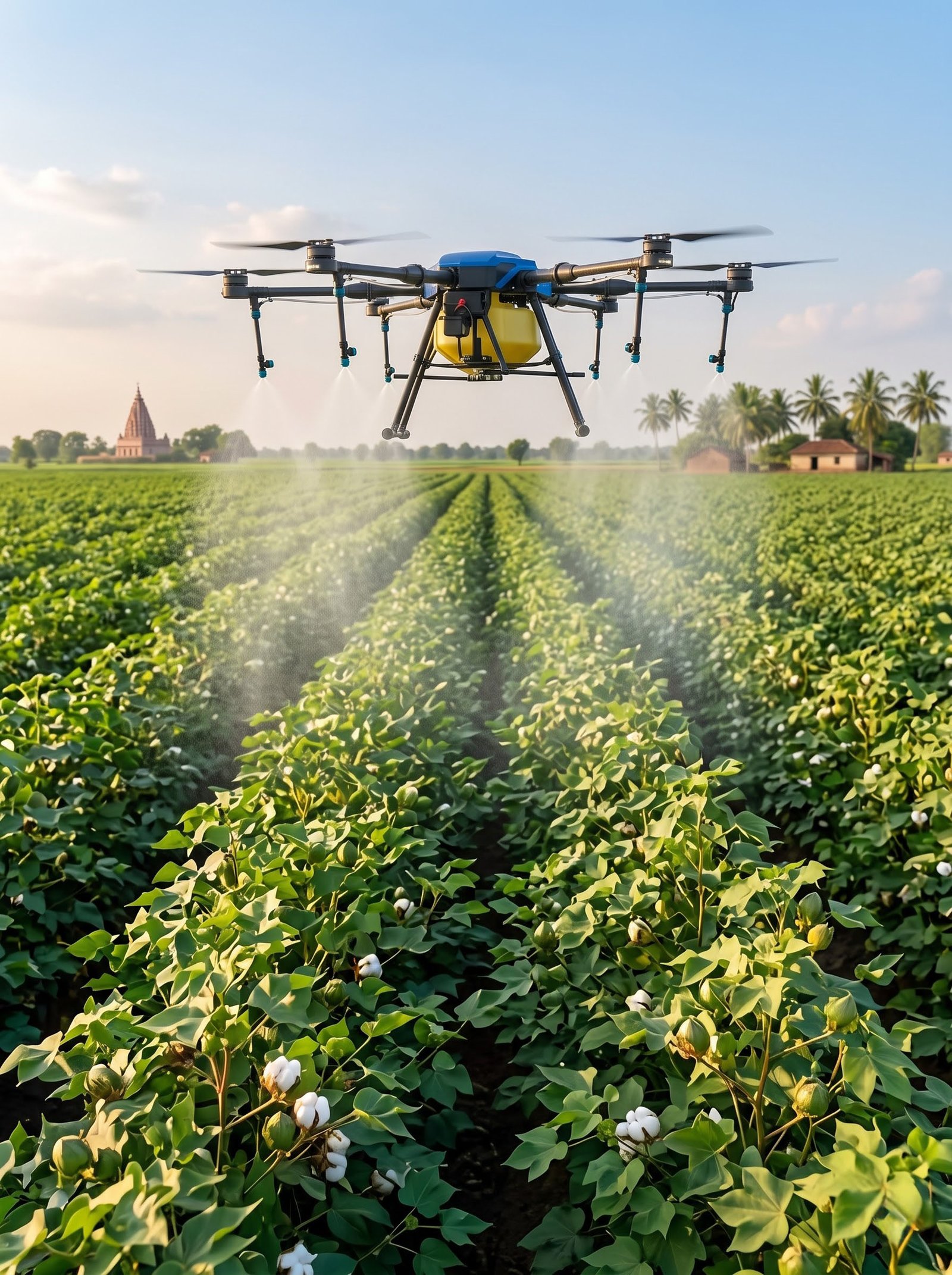
Cotton
Suitable for Drone Insecticide Application
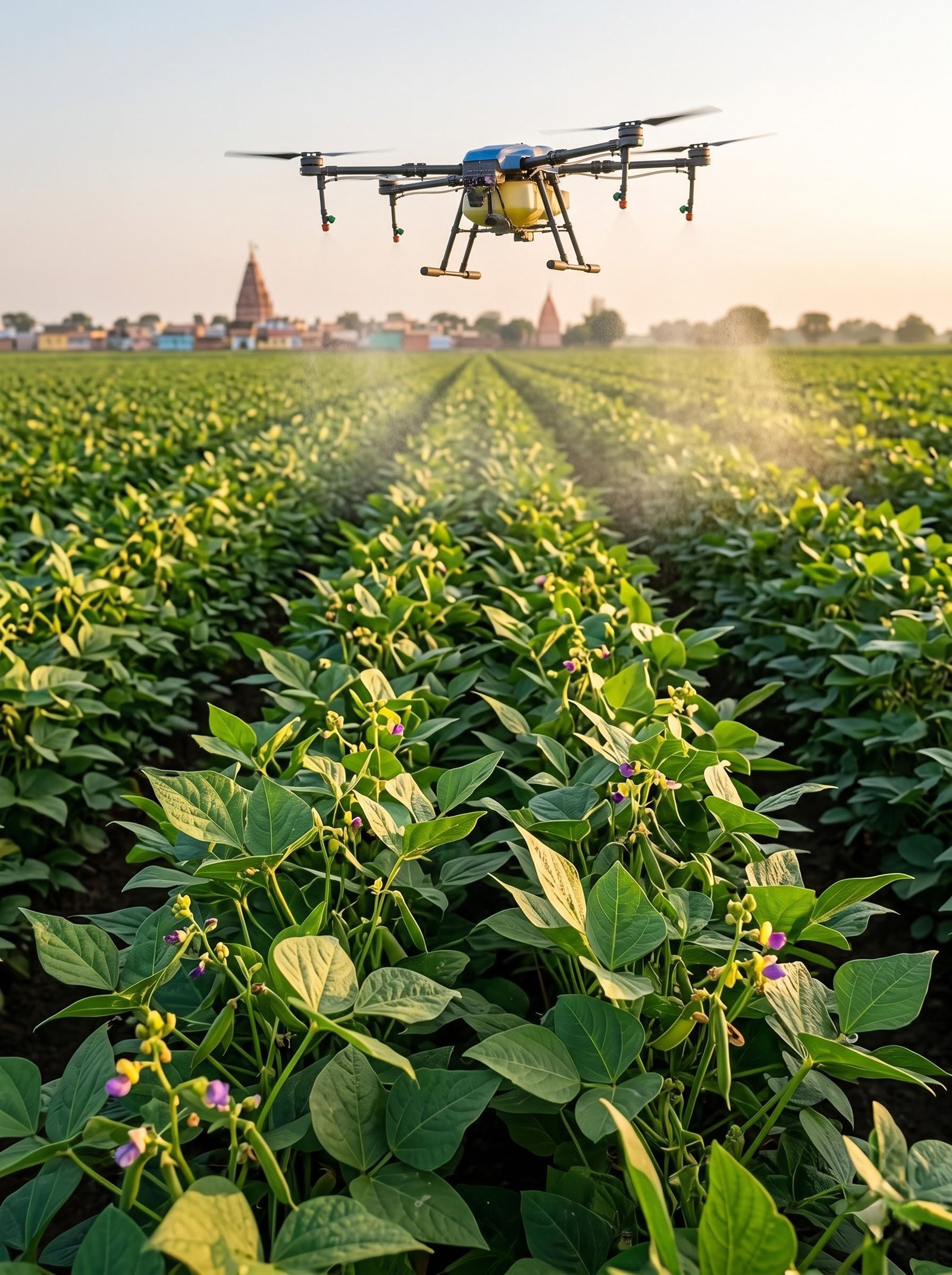
Soybean
Suitable for Drone Insecticide Application
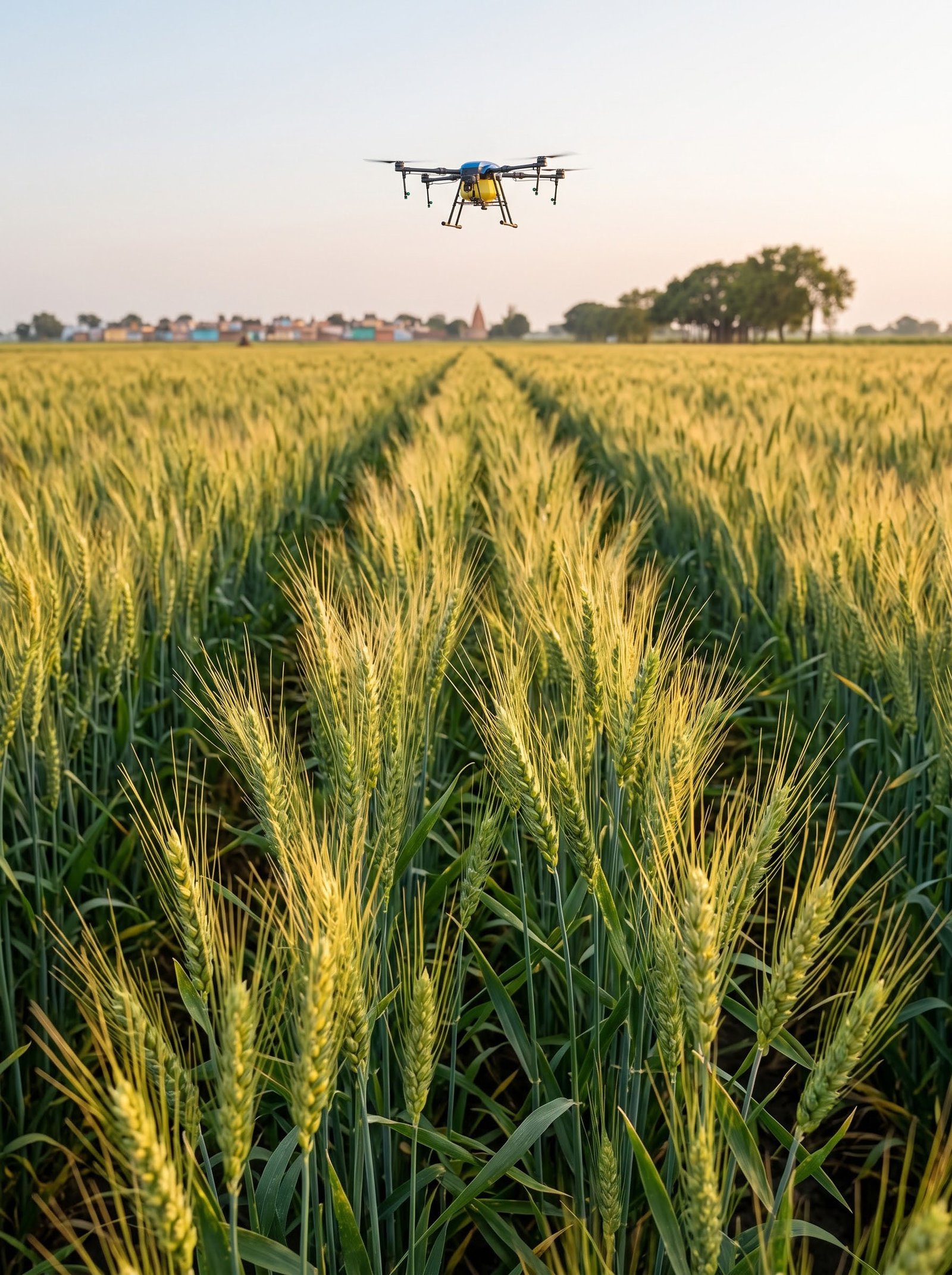
Rice
Suitable for Drone Insecticide Application
Sugarcane
Suitable for Drone Insecticide Application
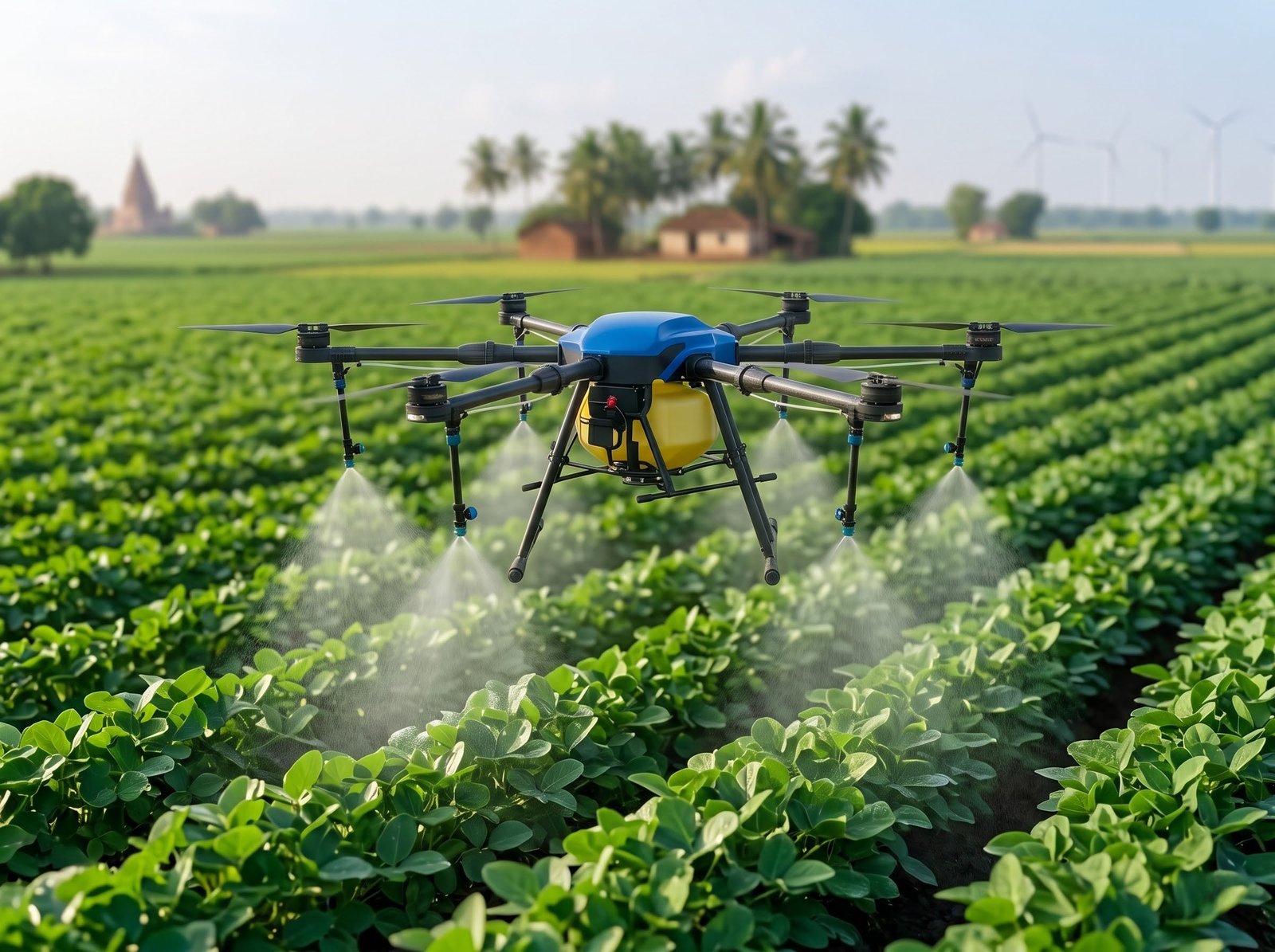
Maize
Suitable for Drone Insecticide Application
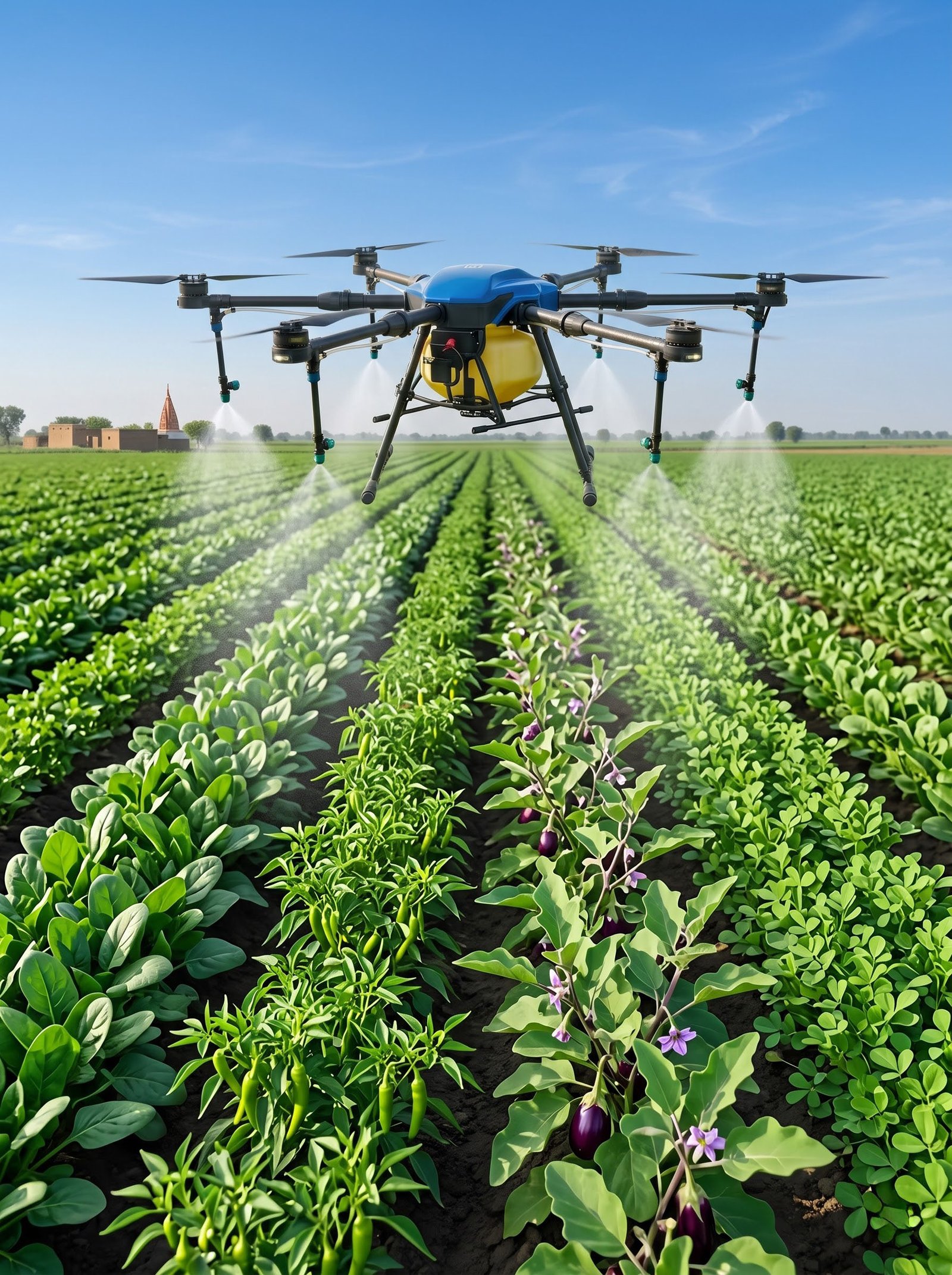
Chilli
Suitable for Drone Insecticide Application
Tomato
Suitable for Drone Insecticide Application
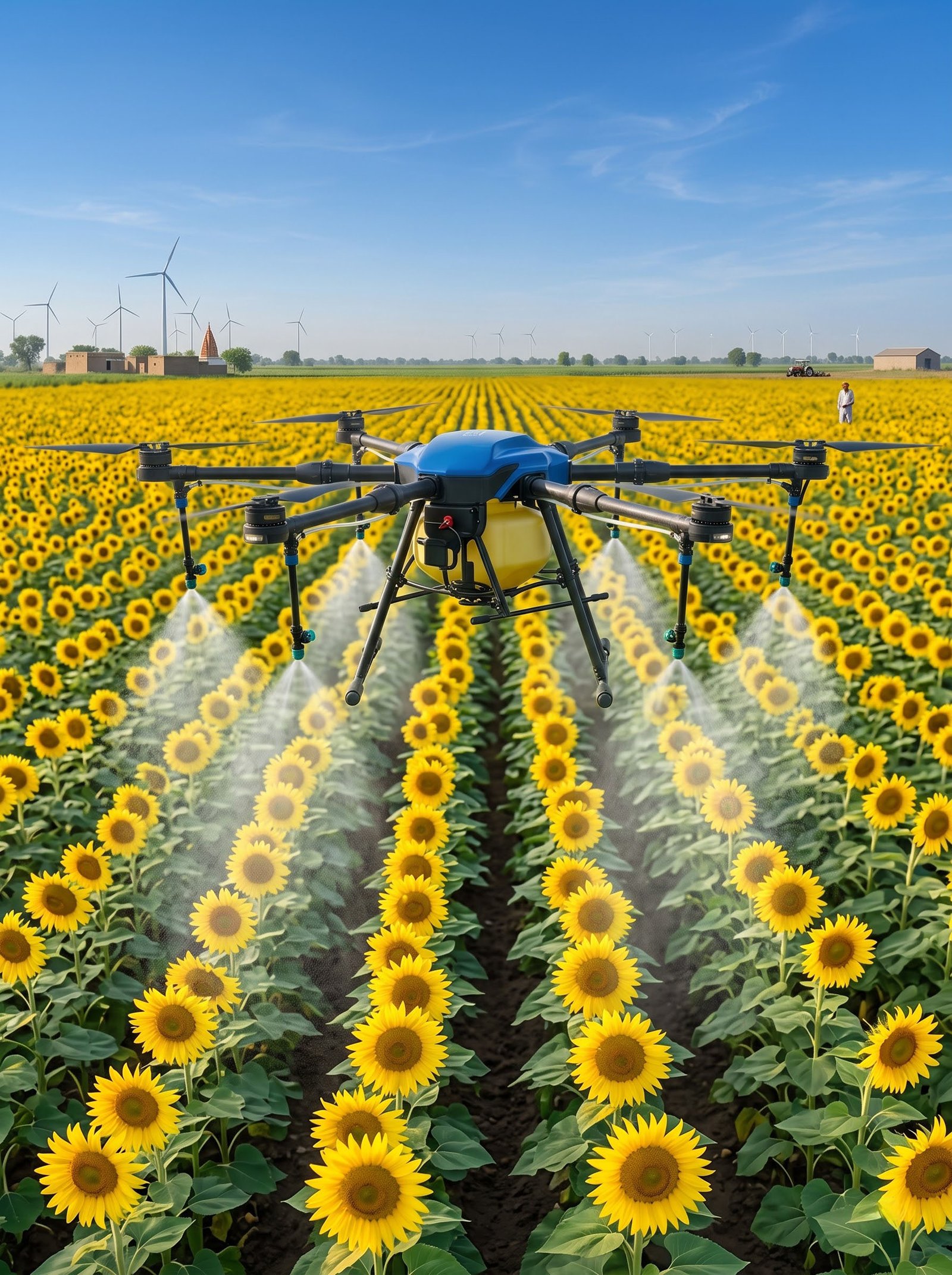
Groundnut
Suitable for Drone Insecticide Application
SPRAY TIMING
When Should You Spray?
A simple operational flow from pest detection to crop protection monitoring.
Pest Detection
Visible insect activity, plant damage or scouting alerts indicate the need for action.
Field Assessment
Crop condition, coverage area, access and spray suitability are reviewed before planning.
Drone Insecticide Application
The drone follows a calibrated spray plan for organised insecticide application.
Crop Protection Monitoring
Post-spray observation helps confirm coverage, response and next-step planning if needed.
Drone vs Manual Insecticide Spraying
A practical comparison based on field workflow and best-application practices.
| Factor | Manual Spraying | Drone Spraying |
|---|---|---|
| Application Speed | Slower over larger acreage | Faster operational coverage across planned fields |
| Crop Damage | Field entry may disturb standing crop | Minimal physical contact with crop rows |
| Operator Exposure | Higher direct exposure during application | Reduced direct exposure during spray operations |
| Field Accessibility | Difficult in tall, wet or dense crop conditions | Better suited for difficult field access conditions |
| Uniform Coverage | More dependent on worker consistency | Planned passes help support balanced field coverage |
| Water Consumption | Often higher spray volume | Typically lower volume under recommended setup |
Drone insecticide operations should follow product label directions, crop recommendations and suitable weather conditions, including avoiding strong wind during application.
SAFE & RESPONSIBLE
Safety Comes First
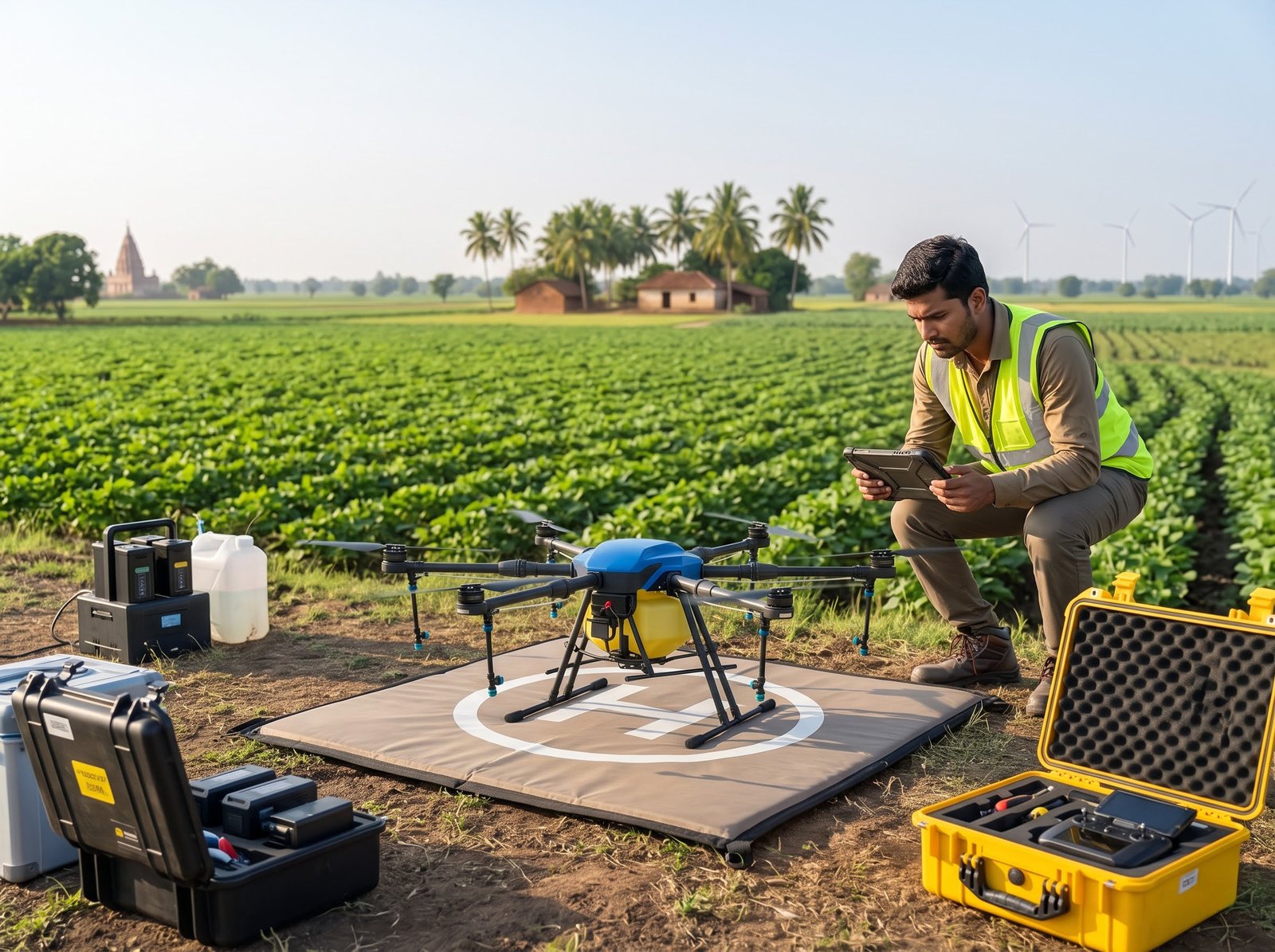
- Trained Drone Operators
- Calibrated Spray System
- Weather-Aware Planning
- Proper Nozzle Calibration
- Safe Chemical Handling
- Precision Flight Planning
Frequently Asked Questions
Answers about insecticide drone spraying services from Droid Krishi.
Protect Your Crops Before Pests Spread
Book professional insecticide drone spraying services with Droid Krishi for fast, precise and reliable crop protection.